


Sculpted Light: Cartier’s Structural Mastery vs. the Airy Poetry of Woven Silver Filigree

How two artisanal philosophies, one architectural and one lace-like, capture light in very different ways.

Every great jewel is, in the end, a conversation with light. Some pieces command it, cutting it into hard, deliberate lines. Others let it in, allowing it to drift, filter and settle like sunlight through a lace curtain in a Saint-Germain apartment. To understand the difference is to understand two of the most compelling languages in Fine Jewelry today: the structural sculpture perfected by Cartier, and the airy, hand-woven filigree of the independent Parisian Atelier.
Two Philosophies of Light
Cartier shapes light through solid form and polished planes. Woven silver filigree catches light through open space and texture. One builds a stage for brilliance; the other turns the metal itself into something luminous and almost weightless.
Cartier: Light as Architecture
Since the Art Deco era, Cartier has treated jewelry as architecture in miniature. Think of the clean geometry of the Love bracelet, the sharp wit of Juste un Clou, the confident volume of the Panthère. In these pieces, gold is a structural material. Its highly polished surfaces act like mirrors, sending light back in strong, clear reflections. Diamonds are set to maximize fire and contrast, and each line is engineered so the eye reads strength, permanence and control.
This is the jewelry equivalent of Chanel’s tweed jacket: disciplined, iconic, instantly recognisable. Its beauty comes from precision.

Filigree: Light as Breath
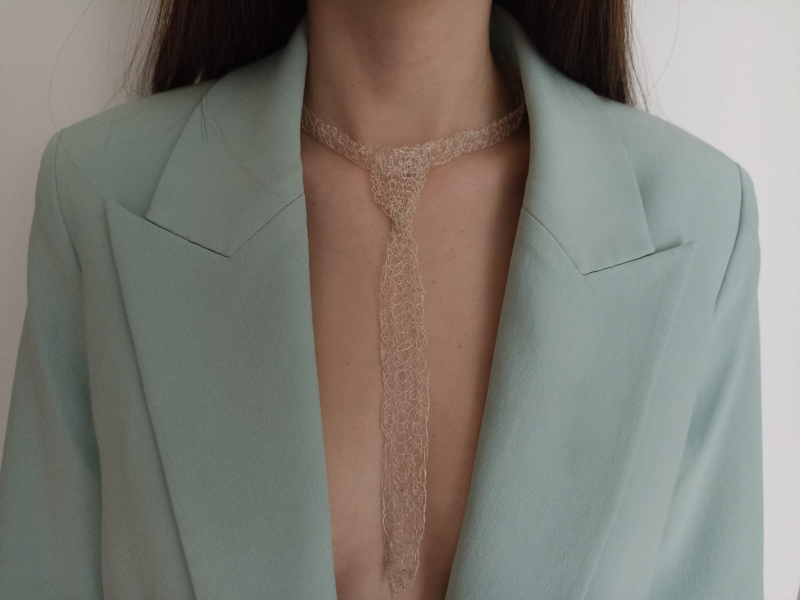
Filigree works in the opposite direction. Fine silver threads are twisted, coiled and woven by hand into openwork patterns, creating what we call Metallic Lace. Light does not bounce off a single surface; it passes through, catches on hundreds of tiny curves, and scatters into a soft, living glow.
If Cartier is Chanel’s architecture, filigree is closer to the romance of a Dior Haute Couture gown: tulle layered over tulle, volume that floats rather than weighs. The result is a Statement Piece with remarkable presence and almost no weight, a jewel you feel more than carry.
Atelier Secrets: How Each Technique Catches the Light
Structural jewelry relies on mass, polish and stone-setting to reflect light. Filigree relies on negative space, texture and the hand of the artisan to diffuse it. The difference starts at the workbench.
The Polished Plane
In structural High Jewelry, light performance comes from flawless surfaces. Metal is cast or forged, then polished until it behaves like a mirror. Pavé settings add sparkle, and Messika’s celebrated Move collection shows how motion can make diamonds dance across a clean, defined frame. The light is bright, directional and dramatic.
The Woven Thread
In Woven Silver Filigree, each thread is drawn, twisted and placed by hand. Because no two coils are exactly identical, light breaks up in slightly different ways across the surface. This is why filigree glows rather than flashes. Under candlelight it shimmers; in daylight it turns soft and pearly. At Julia Mosina, this technique is pushed toward fluid, sculptural shapes, so the lace becomes three-dimensional: large in volume, light as air.
Dimension | Rigid Modern Geometries (Cartier-style structure) | Organic Metallic Lace (Woven Silver Filigree) |
How light behaves | Reflected: sharp, mirror-like flashes | Diffused: soft, luminous glow through open space |
Texture | Smooth, polished, continuous surfaces | Hand-woven, tactile, finely detailed |
Weight & volume | Substantial weight, compact volume | Near-zero weight, generous sculptural volume |
Emotional register | Power, permanence, iconic status | Poetry, intimacy, discovery |
Fashion parallel | Chanel tailoring, Art Deco architecture | Dior Haute Couture tulle, Parisian lace |
Best styling context | Boardroom, signature everyday stack | Evening, ceremony, minimalist daywear as contrast |

Color & Gemstones: Framing Versus Floating
Structural design frames a gemstone like a jewel in a vault. Filigree lets a gemstone float, surrounded by air and light. Both are beautiful, but they create very different moods.
In the Cartier tradition, colored stones are often bold, graphic statements: the carved rubies, sapphires and emeralds of Tutti Frutti, or the striking contrasts of onyx and coral. Strong metal frames intensify saturation and give each stone a clear, architectural role.
Filigree offers another approach. Because the setting is open, light reaches the stone from many angles, so color appears softer, more luminous and more alive. A cool silver lace beside a deep stone creates a gentle, modern contrast, one that suits the restrained palette of Quiet Luxury better than overt display. In a bespoke commission, the stone is not imprisoned by the metal; the lace seems to hold it in suspension.
Styling Guide: Wearing Structure and Lace
The most sophisticated approach is not to choose between structure and lace, but to let each one heighten the other. Contrast is the secret of Parisian chic.
How to style both:
Let one piece lead. A sculptural filigree necklace is a full Statement Piece; pair it with a single fine gold bangle rather than a crowded stack.
Play texture against fabric. Metallic lace looks extraordinary against matte cashmere, crisp poplin or black crêpe, where its light-catching detail can be fully read.
Mix metals with intention. Silver filigree beside a yellow-gold Cartier piece feels modern and personal when the shapes contrast: one geometric, one organic.
Use volume where weight would tire. Large filigree earrings give evening drama without fatigue, ideal for long dinners, galas or Gulf summer nights.
Keep the neckline simple. Strapless, boat-neck or a sharply cut white shirt lets airy volume become the architecture of the look.
Key Takeaways for the Collector
Cartier offers a timeless language of strength and recognition. Handcrafted filigree offers rarity, intimacy and a lighter, more personal kind of luxury. A thoughtful collection has room for both.
Structure reflects light; lace diffuses it. Choose according to the mood you want to create, not only the metal or the stone.
Weight is not a measure of value. In filigree, artistry is measured in hours of hand-weaving, not grams.
Rarity matters to the modern collector. A piece Handcrafted in Paris in a single atelier carries a story that mass-produced High Jewelry cannot.
Contrast creates signature style. Pairing iconic geometry with organic lace is one of the most elegant ways to make a collection your own.

At Julia Mosina, every piece begins with a single silver thread and a Parisian sense of lightness. We invite you to discover the collection on our official website or, if you are in Paris, to visit for a private consultation, where a jewel can be shaped around you.
À très bientôt à Paris.



Comments